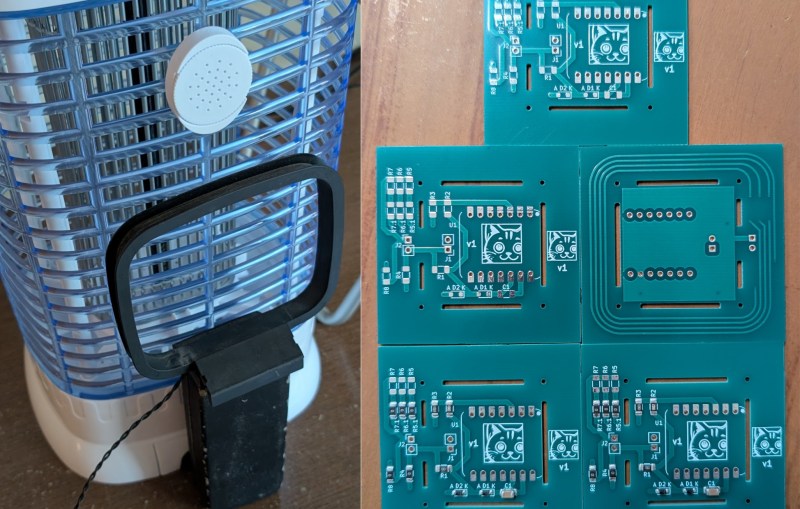
If it’s summer in a warm, humid climate, bugs can be the bane of your existence. A natural solution is to place a passive bug zapper to catch bugs at night. But what if that isn’t fancy enough? [Nicolas Boichat] spices it up with a passive bug zapper that tracks its kill count.
But how exactly do you detect a bug zap? With an antenna, of course! When a bug gets caught, it arcs, creating an electromagnetic pulse. A small loop antenna on the backside of the zapper receives the signal.
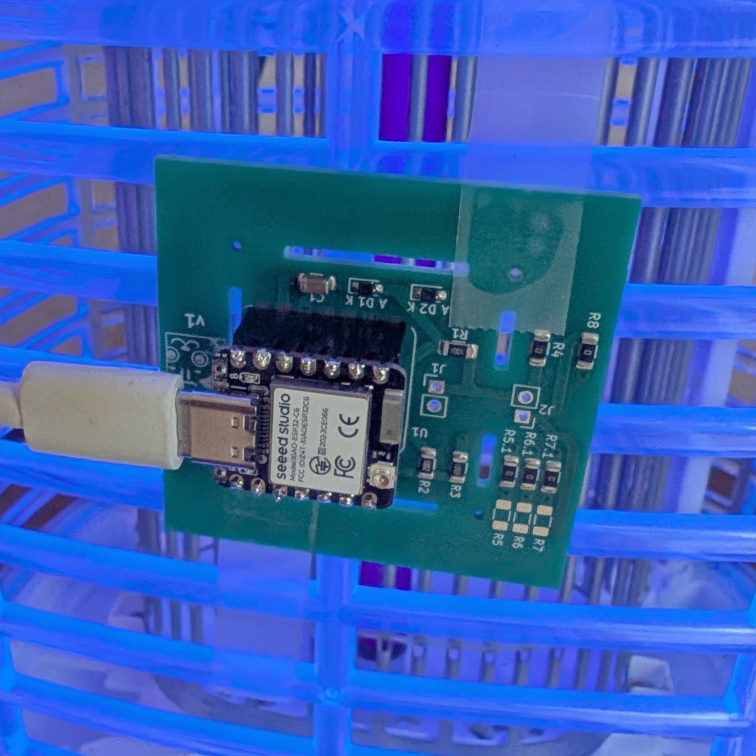
It was also in part an experiment to see how good you can “vibe-EE” and, well, mixed results. Claude was able to correctly identify basic concepts of EE needed here, but was largely worthless at making schematics. After some manual circuit doodling, then building, [Nicolas] successfully got an ESP32-C6 to detect the voltage spikes.
Of course, where there’s data, there must be a dashboard. Using existing graphing libraries and a custom PCB, [Nicolas] has the ultimate bug zapping experience.
We’ve covered a similar idea in the past, namely one based on current sensing.


 Hello, my name is Riaz and if you want to know more about me just contact me
No comments:
Post a Comment