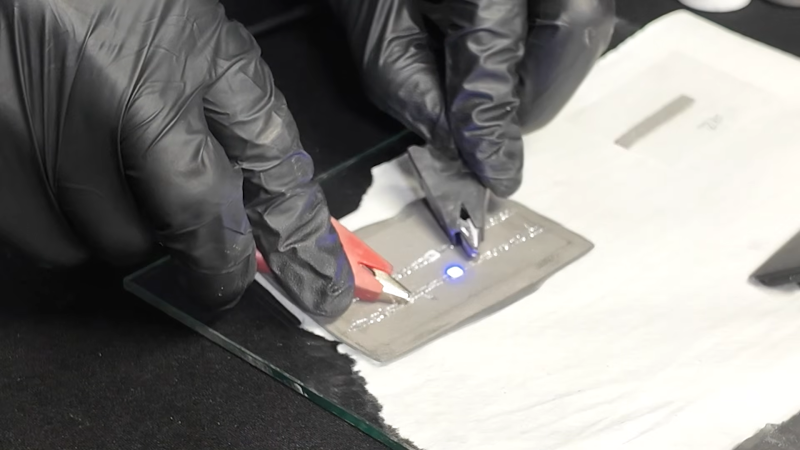
PCB circuits are cool, but you know what is cooler? Terminator circuits that’s what! And what if the same material that makes Terminator circuits could also be used for smart heat sinks, flexible circuits, and self-healing material properties? Well, that is exactly what the lab at Virginia Tech’s VT MADE Lab has created, presented by Joel from [3DPrintingNerd].
So what does a Terminator circuit actually entail? Well, just like in Terminator 2, the circuits are made of liquid metal. Specifically, small drops of liquid metal alloy made of gallium and indium. These drops are contained within a matrix of PDMS polymer, which contains the magical liquid for conductivity, thermal and electrical . This makes a flexible and stretchy composite which can even self-repair when punctured or cut by bridging the

broken circuit with the liquid alloy. Having a polymer matrix allows this self-repairing property but also makes the material insulating by default, only allowing current to flow after selectively “popping” the matrix bubbles.
To create something with the composite material, you’ll find it similar to many other resin-based materials. You can pour, mold, and even 3d print a custom geometry. A short bake later and you get a solidified model made for whatever custom flexible circuitry you have in mind.
While this process requires chemicals, polymerization reactions, and a taste for liquid alloys, that shouldn’t stop you from trying out flexible electronics. For a more hands on method to flexible electronics check out this glove with circuits running throughout!


 Hello, my name is Riaz and if you want to know more about me just contact me
No comments:
Post a Comment